Submit Request ...
-
Forums
Biological Importance of Soft Tissue Management in Implant Surgery; A Key Strategy for Preventing Peri-implantitis

In traditional dentistry, the primary hallmark of success in dental implant treatments was achieving Osseointegration, defined as the direct structural and functional connection between living bone and the fixture surface. However, clinical evidence and long-term literature in periodontology demonstrate that long-term marginal bone stability heavily depends on the health and stability of the overlying soft tissue. Today, intelligent Soft Tissue Management is recognized as the primary defensive barrier against microbial invasion and the key factor in preventing peri-implant infectious diseases, particularly Peri-implantitis.
This specialized, evidence-based article reviews the academic standards and microscopic periodontal surgical techniques required by dentists and specialists in this field to maximize the longevity of implant treatments.
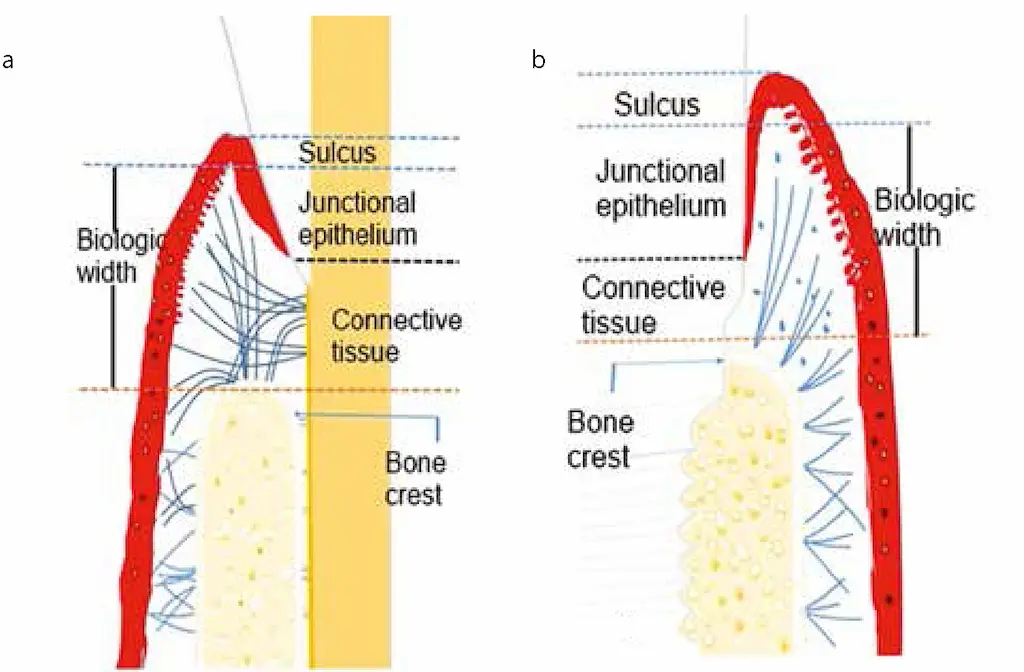
Anatomical and Histological Differences Between Peri-implant and Natural Periodontal Tissues
To understand the necessity of soft tissue management, it is crucial to recognize the structural differences between the gingiva surrounding a natural tooth and the peri-implant mucosa surrounding the abutment and implant:
Collagen Fiber Orientation: Around a natural tooth, supracrestal collagen fibers insert perpendicularly, obliquely, and horizontally directly into the cementum, creating a highly resilient physical barrier. Conversely, around an implant, due to the absence of cementum, collagen fibers run parallel or circularly relative to the fixture and abutment surfaces, which reduces the tissue's mechanical resistance against plaque penetration.
Vascularity: The peri-implant tissue lacks the highly advanced vascular network of the periodontal ligament (PDL). The primary blood supply in this region is derived solely from the bone periosteum vessels and the supraperiosteal vascular plexus of the connective tissue. This relative decrease in vascularity diminishes the local immune response against bacterial biofilm accumulation.
Compared to natural gingiva, the peri-implant mucosa contains a higher proportion of collagen fibers and a lower number of fibroblasts and blood vessels; a structure resembling scar tissue, which exhibits greater vulnerability to inflammation induced by microbial plaque accumulation.
Keratinized Mucosa Width (KMW) and Its Impact on Implant Survival
One of the persistent challenges in reconstructive surgeries is maintaining an adequate zone of attached keratinized tissue around the implant neck. According to the guidelines of the American Academy of Periodontology (AAP), a minimum of 2 mm of Keratinized Mucosa Width (KMW), with at least 1 mm being attached mucosa, is essential for maintaining soft tissue health and preventing marginal bone resorption.
An inadequate zone or absence of stable keratinized tissue leads to the following complications:
Increased Microbial Plaque Accumulation: Due to the mobility of the alveolar mucosa, toothbrushing and maintaining proper oral hygiene become painful for the patient, resulting in greater bacterial plaque stagnation at the mucosal margin.
Soft Tissue Recession: Thin and non-keratinized mucosa rapidly undergoes recession under mechanical stresses from mastication and prosthetic restorations, leading to implant thread exposure and compromised esthetics.
Elevated Risk of Microleakage and Inflammation: The lack of a firm biological attachment creates a pathway for anaerobic bacteria to migrate into deeper structures.
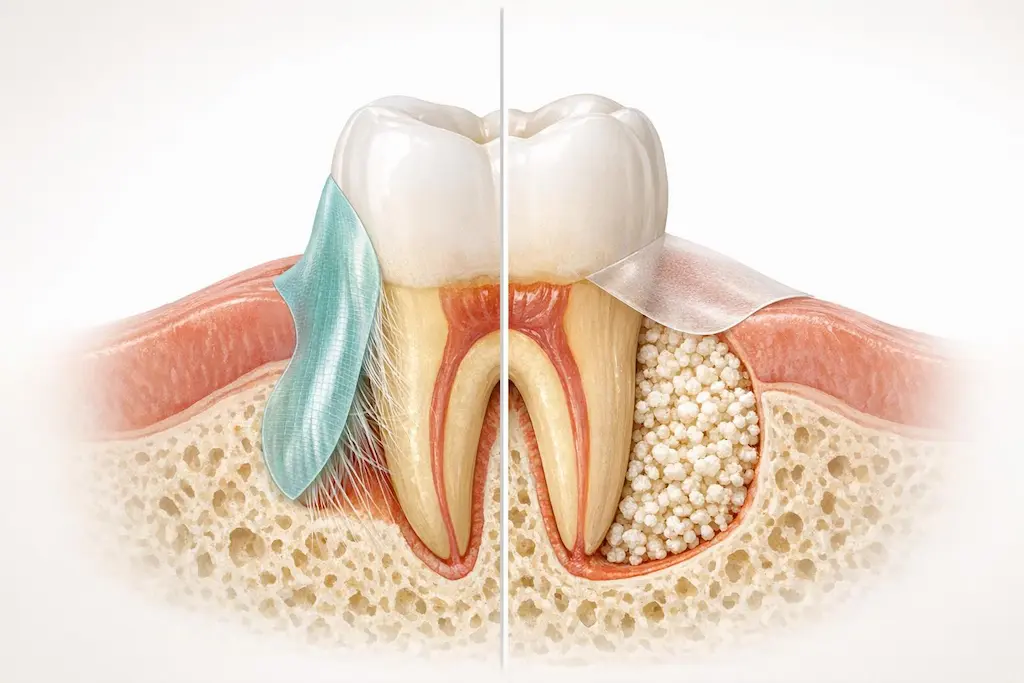
Advanced Soft Tissue Reconstructive Techniques by the Periodontist
To modify the soft tissue phenotype and increase the width of keratinized tissue, the periodontist can perform plastic and reconstructive peri-implant surgeries at various treatment stages (prior to implant placement, simultaneously with stage I or II surgery, or even after prosthetic loading). The most prominent techniques include:
1. Free Gingival Graft (FGG)
This technique represents the gold standard for increasing keratinized mucosa width in non-esthetic zones (such as the posterior mandible). By harvesting an epithelialized connective tissue graft from the patient's palate and transferring it to the implant site, tissue resistance against tensile forces is predictably secured.
2. Subepithelial Connective Tissue Graft (CTG)
In anterior regions with high aesthetic demands (Esthetic Zone), connective tissue grafts combined with advanced flap designs (such as the Coronally Advanced Flap) are utilized for Gingival Phenotype Augmentation. This approach not only increases tissue thickness and masks the grey shadow of metallic abutments but also ensures the long-term stability of the interdental papillae.
3. Apically Positioned Flap (APF)
This technique is frequently executed during stage two surgery (implant uncovering) to displace and fix the existing keratinized tissue apically around the implant collars, eliminating the need for a palatal donor site.
The Direct Role of Soft Tissue Quality in Preventing Peri-implantitis
Peri-implant diseases are classified into two distinct categories: Peri-implant Mucositis, which is a reversible inflammatory lesion confined to the soft tissues, and Peri-implantitis, characterized by soft tissue inflammation accompanied by progressive marginal bone loss.
When soft tissue management is meticulously performed during surgery and an appropriate Biologic Width is established, this tissue functions as a robust Biological Seal. This barrier prevents bacterial toxins from penetrating the osseointegration environment, significantly reducing the incidence of peri-implantitis, even in patients with a history of periodontal disease.
Specialized Center for Periodontics and Advanced Dental Implants in Mashhad
Achieving predictable outcomes in advanced dental implant therapies, complex bone augmentations, and plastic, microscopic peri-implant soft tissue surgeries demands profound academic knowledge and exceptional clinical expertise.
Prof. Dr. Moein Taghavi, a specialist in Periodontics (Gingival Surgery and Implants) in Mashhad, leverages decades of academic teaching, international research, and successful clinical treatments to offer the most specialized services in gingival phenotype assessment, advanced hard and soft tissue grafting, and standard dental implant placement. At his specialized clinic in Mashhad, utilizing the latest global methodologies, the biological health, mechanical efficiency, and esthetics of your smile are guaranteed at the highest standard.
Please let us know what you think!